How a Side Table Moves from Utility to Accent
A side table can hold daily essentials and add character; learn how placement, shape, and a few deliberate objects make both roles work together.
The most common side-table mistake is making it either a dumping ground or a display no one dares touch. The cost is a corner that looks cluttered or a useful surface that feels oddly off-limits. A side table works best when its practical job leads and its decorative character grows around it.
Start with the seat and the reach
A side table earns its place beside something else: an armchair, bed, sofa, or desk. Begin by noticing what you reach for there. A drink, reading glasses, a book, or a lamp may matter more than an object chosen simply to fill the top.
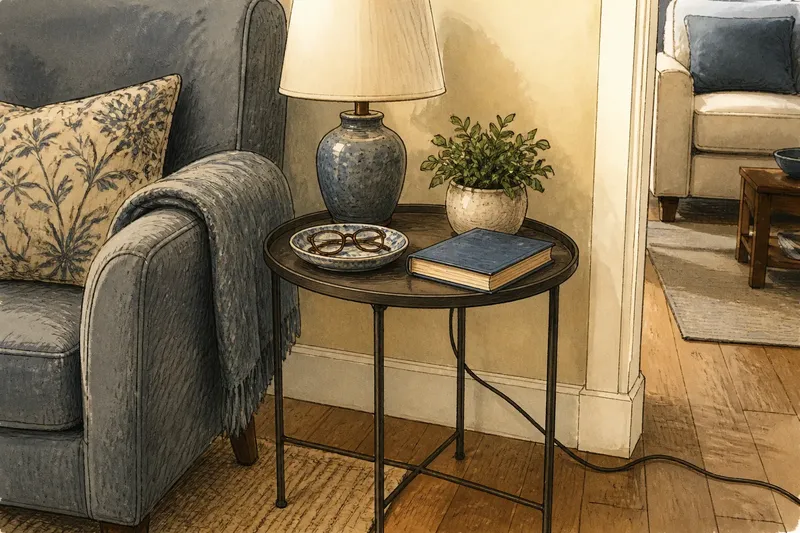
Move the table close enough that you can set down a cup without leaning far, while keeping the route past the seat clear. Check the lamp cord, too; it should not cross a walking path or pull taut when the lamp is switched on. These small placement choices make the table’s utility visible.
Shape can help with a tight corner. A C-shaped table can slide partly beneath a sofa, while a narrow pedestal can leave more floor visible than a broad cabinet. Choose by the actual reach and route around the furniture, not by silhouette alone.
Let useful objects create the accent
Decoration often arrives through repetition. A book that stays beside an armchair, a small bowl that catches loose change, or a lamp used every evening can give the table a recognizable character without turning it into a formal display.
Try one visually distinctive object that also serves the routine: a ceramic dish for glasses, a tray for a remote and coasters, or a lamp with a shade that echoes a color elsewhere in the room. The table still works when these items are handled; their presence simply gives the corner a more considered look.
Say your armchair has no nearby surface and your reading glasses keep landing on the floor. Place a small table within easy reach, set a shallow dish on it, and put the glasses in the dish after reading. The observable result should be a clear seat-side landing spot, with the dish adding a little color rather than taking over the top.
Use the room’s materials without matching everything
A side table changes character beside different neighbors. A light-legged stand can soften a deep upholstered chair; a painted table can add a lively note beside a plain wooden bed. These are possibilities, not rules: the same table may feel quiet in one corner and prominent in another.
Look for one connection to the room, such as a shared wood tone, rounded shape, or metal finish. The table does not need to match every piece. A worn edge or repaired handle can also make an older table feel at home among polished furnishings, provided its condition suits the way you plan to use it.
What is not worth the effort is adding objects just to fill every open patch of tabletop. A little breathing room makes it easier to set down a cup and lets the objects already there read clearly.
How can a side table serve and look considered?
What should I put on a side table?
Start with the items you use in that exact spot, such as a drink, book, glasses, or lamp. Add a decorative object only if you can still place those essentials without shifting everything around.
How do I place a side table beside a chair?
Set it within a comfortable reach from the seated position, then check that its legs and any lamp cord do not obstruct the route past the chair. If reaching or walking feels awkward, move the table or try a narrower shape.
Can a side table work in a small room?
Yes, if its shape fits the available space and the nearby furniture. A C-shaped table can tuck partly beneath a sofa; a narrow pedestal may leave more visible floor than a broad cabinet.
How do I keep a side table from looking cluttered?
Give recurring items a clear place and remove anything that has no use or visual purpose in that corner. A shallow tray can gather small objects, but it should not become an excuse to keep adding them.
Should a side table match the other furniture?
Not necessarily. Choose one point of connection, such as a shared finish or shape, and let the rest differ if that makes the corner feel more personal.
Check the setup against daily use
- Observe whether you can set down a drink from the seat; if you must lean or twist, move the table closer, then check that it remains out of the walking route.
- Observe whether the lamp cord crosses a path or pulls taut; if it does, relocate the lamp or table, and use another light source if the cord still cannot sit safely.
- Observe whether daily items have a clear home; if glasses or a remote keep wandering, add a small dish or tray, but remove an item that still has no regular place.
- Observe whether a decorative object blocks the useful surface; if it does, move it to a shelf or choose a smaller accent, then leave room for the drink or book.
- Observe whether the table narrows the route around the chair; if it does, shift it or choose a narrower shape, and keep the corner open if neither option clears the path.
- Observe whether the table feels disconnected from the room; if it does, repeat one nearby color, material, or shape, but leave its other finishes distinct rather than forcing a full match.
Imagine a reader with a narrow armchair corner, a book, glasses, and a lamp whose cord currently crosses the path to the sofa. They move a slim table beside the chair, place the lamp toward the wall, and set a small dish near the seat for the glasses; the book stays on the open part of the top. The expected result is a reachable surface with a clearer walking route, though the reader may need a different lamp position if the cord still crosses the path.
Let the table’s role change with the routine
A side table is easy to move, so its role can change as habits shift. One that once held a bedside lamp may later work beside a reading chair, where a book and glasses become the usual companions. Before adding more decor, try the table in the place where its daily task makes the most sense.
Keep the main search question in view: a side table can move from utility to accent through placement and selection, not by giving up its practical purpose. Leave enough clear surface for the items you actually use, and let one meaningful or visually distinctive object give the corner its character.