A Grey Afternoon, Seen Through Window Light
A grey-afternoon window-light exercise helps you notice changing textures and choose a comfortable place to spend an hour at home.
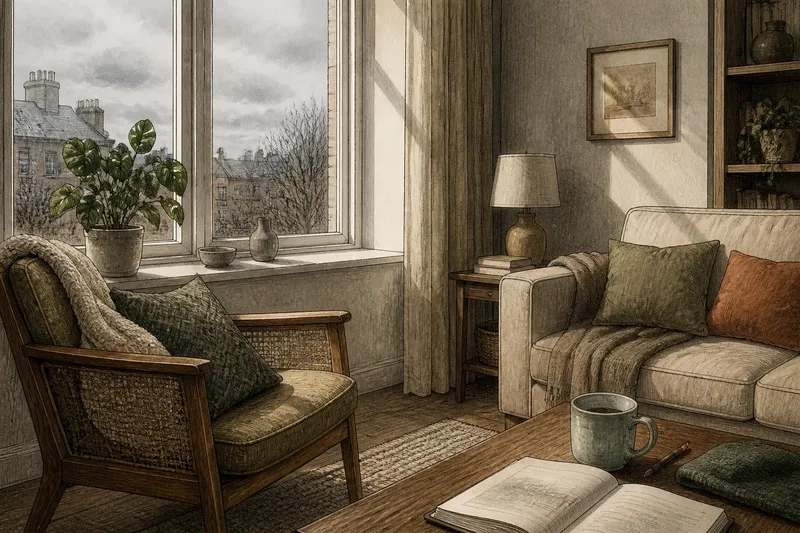
The common mistake on a grey afternoon is treating the window like a dimmer switch: less sun, less to notice. A grey-afternoon window-light exercise can help you choose a place to sit by noticing what the daylight actually does to a chair, rug, or sleeve of a sweater.
You need only a window, an hour you can spend at home, and a couple of brief glances. The point is not to judge the room or chase its brightest spot, but to notice which mix of light, texture, and position feels comfortable for what you want to do.
Grey-afternoon window light varies from room to room
Cloud cover softens direct sunlight, but daylight does not become uniform. A window frames a particular slice of sky, while a nearby wall, deep sill, curtain, or building outside can alter how the light enters and where it falls.
The change may be subtle. A bright area can creep across the floor, lose its edge, or slide away from a cushion; shifts in cloud cover can also make a surface seem clearer or more subdued.
Instead of asking only whether the room is bright, notice what the light does. Does it make a woven surface look distinct or flatten its pattern? Does it reach the place where you might sit, or only the wall above it?
Check a few surfaces from where you plan to sit
Choose a window and let your eyes adjust. From the seat you are considering, glance at a few nearby surfaces: perhaps a book cover, cushion, plant leaf, and the floor beside a chair. Smooth, soft, and irregular materials can show the light differently; a painted wall may hold a quiet wash, a wool throw may reveal ridges, and a ceramic mug may carry a dull reflection.
Look from ordinary seated height, not just while standing across the room. A luminous windowsill may disappear from view once you settle into a chair, so the perspective you will actually occupy is the useful one.
Use a few observations to make a simple choice
Look once near the start of your hour and again later, rather than tracking every shift. Notice where the light falls, whether a texture becomes easier to see, and whether a reflection or moving view draws your attention. Then choose between the places you already have, based on the activity you want to do.
- If the seat lets you read without squinting, use it for reading; if the page is hard to see, choose another existing spot or add suitable task lighting.
- If glare lands on a screen or glass, turn your seat or screen away; if the glare remains distracting, move to a different seat.
- If a cushion’s pattern looks pleasant from your seated position, settle there for a quiet pause; if it feels visually busy, choose a calmer view.
- If the window is beside you rather than directly in your line of sight, keep that seat for a view that does not command your attention; if the view keeps pulling you away, turn or move.
- If a curtain softens an uncomfortable patch of light, draw it partway; if the room then feels too dim for your activity, open it again or choose another place.
- If the floor or chair arm shows a texture you enjoy, let that be a reason to sit nearby; if nothing in that spot catches your interest, choose based on comfort and the task instead.
There is no need for a log, a phone camera pointed at the window, or repeated furniture adjustments. A couple of glances and one small, reversible choice are enough for this modest decision.
Compare seats by comfort and purpose
Consider two or three places where you could comfortably spend the hour. A chair near the window may offer a view and clear light; a sofa farther away may feel visually quieter. Neither is automatically better.
Ask whether each seat suits the activity. For reading, consider page visibility and glare. For mending or sketching, a clear view of the material may matter more. For a quiet pause, you may prefer a broad, low-contrast view without reflections competing for attention.
Imagine you have a chair beside the window and a sofa across the room. At the start of a grey afternoon, the chair cushion looks flat, while the sofa sits near a softly lit wall. Later, the window light makes the cushion’s woven pattern easier to see, but a reflection on a nearby screen catches your eye. If turning the screen removes the distraction, the chair may suit a reading break; if the reflection persists, the sofa is the calmer choice.
Notice color without turning it into a verdict
Color depends on context. A muted green cushion may look subdued beside a pale wall and more pronounced against a dark bookcase. Depending on the window’s direction, surrounding colors, and your own eyesight, the sky’s cool appearance might make a warm-toned material seem more noticeable—or it might not.
A passing impression is not a decorating verdict. If a surface looks dull today, it does not follow that it needs replacing or repainting. Ask the smaller question: does this place feel pleasant for the activity you have in mind?
The view can matter too. Moving branches or rain on the glass may feel engaging; a blank wall may be easier to ignore. Notice which suits your attention rather than treating either view as universally preferable.
What should you notice during a grey afternoon?
Does grey weather make window light unimportant?
No. Overcast light can still vary across a room as the sky and surroundings change. Notice its spread and its effect on nearby surfaces rather than judging it by brightness alone.
How often should you check the light?
A glance near the beginning and another later in the hour can reveal whether anything has changed enough to affect your choice. Keep the activity itself at the center rather than watching the window continuously.
Should you move furniture to follow a bright patch?
Not for this small decision. Try an existing seat or a slight change in your position first; a temporary preference does not need to become a room redesign.
What if the window light feels uncomfortable?
Choose a seat outside the glare or adjust a curtain if that suits the room. For persistent physical discomfort or concerns about vision, seek guidance from an appropriate qualified professional.
Choose for this hour, not for every afternoon
The useful result may be a small distinction: the window seat feels pleasant while the sky is bright, while the sofa feels calmer when the light grows flat. Perhaps the fabric’s texture matters more to you than the view. Either way, the grey-afternoon window-light exercise gives you a simple reason to choose where to spend an hour without turning the weather into a project.
Let the room’s current conditions guide the choice, and change seats if they stop suiting you. A comfortable place for this afternoon need not become a permanent favorite.